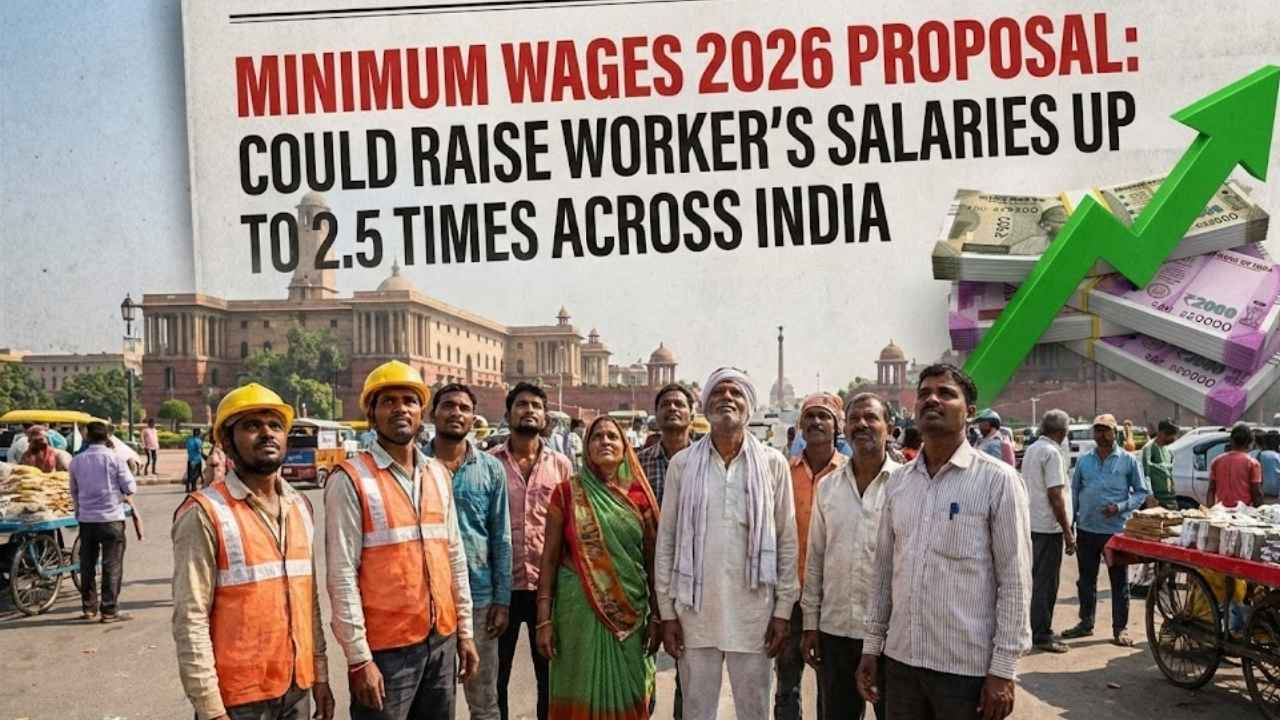
Ministry of Labour and Employment has introduced a new proposal to revise minimum wages across India, aiming to improve the income of millions of workers. The plan focuses on updating old wage rates to match today’s rising cost of living. It is designed to provide fair pay and better financial security for daily wage earners and low-income employees.
With this new move, salaries could increase by up to 2.5 times in several sectors, bringing real relief to working families. Higher wages may help workers manage expenses, save more, and live with greater stability. The proposal is seen as an important step toward building a stronger and more balanced workforce in the country.
Minimum Wages 2026 Proposal Could Raise Worker Salaries
The Minimum Wages 2026 proposal aims to bring a big change in how workers are paid across India. The government plans to revise the basic wage rates so that salaries match today’s living costs. This step is expected to support millions of workers who struggle with low incomes. It focuses on creating fair and stable earnings for everyone.
If approved, many workers could see their pay increase by up to 2.5 times. This means better savings, improved living standards, and more financial security for families. Daily wage, contract, and low-income workers are likely to benefit the most. Overall, the proposal could make a strong positive impact on India’s workforce.
What Is the Minimum Wages 2026 Proposal All About?
The Minimum Wages 2026 proposal is a new plan to increase basic pay for workers across India. It aims to set a fair and updated wage system based on today’s living costs. The government wants to ensure that every worker earns enough for daily needs. This move focuses on better income security for millions of families.
Why the Government Plans a Major Salary Revision
Prices of food, rent, and essentials have gone up in recent years. Many workers are struggling to manage expenses with old wage rates. The government believes salaries must match the rising cost of living. The revision is meant to improve financial stability and reduce income gaps.
How Workers Could Earn Up to 2.5 Times More
Under the proposal, minimum wages may increase significantly in some sectors. The new rates are expected to be much higher than current pay levels. This could help workers earn up to 2.5 times more than before. Higher earnings would mean better savings and a better quality of life.
New Wage Structure Explained in Simple Terms
The new structure will set a clear base salary for all workers. It may also include fixed rates for different skill levels and job types. This makes pay more transparent and fair for everyone. Workers will know exactly what they should earn.
Who Will Benefit the Most From the Salary Hike?
Daily wage workers and low-income employees are likely to benefit the most. People in construction, factories, and small businesses may see bigger increases. Contract and unorganized sector workers could also get better protection. Overall, the hike is designed to support those who need it most.
Impact on Daily Wage, Contract, and Private Sector Workers
Daily wage and contract workers are expected to see the biggest change in their income. Many of them currently earn very low pay for long hours. The new proposal could give them better and more stable wages. Private sector workers may also benefit from clearer salary standards. Overall, it could bring more fairness across jobs.
State-Wise Changes and Possible Differences in Pay
Wages may not be the same in every state. Pay rates could depend on local living costs and job demand. Bigger cities may have higher minimum wages than smaller towns. Each state government may set its own final rates. So workers might notice some differences across regions.
How Employers and Businesses May Respond
Some businesses may welcome the change as it improves worker morale. Others might worry about higher labor costs. Small companies may need time to adjust their budgets. Employers could focus more on productivity and efficiency. Over time, many may adapt to the new system.
Expected Implementation Date and Timeline
The proposal is expected to roll out in phases starting in 2026. The government may first announce the final wage structure. After that, states and companies will get time to prepare. Full implementation could take several months. Workers should watch for official updates.
Benefits for Workers’ Living Standards and Families
Higher wages can improve daily life for many families. Workers may afford better food, healthcare, and education. Savings and financial security could also increase. Less stress about money can lead to a better quality of life. Overall, families may feel more stable and confident.
Challenges and Concerns Around the New Wage Plan
There may be some challenges during the transition. Small businesses might struggle with rising costs. Some fear job cuts or fewer new hires. Price increases in goods and services are also possible. Proper planning will be important to avoid these issues.
What This Means for India’s Economy and Job Market
Better wages can increase spending in the market. When workers earn more, they buy more goods and services. This can help businesses grow and boost the economy. It may also create new job opportunities. In the long run, the job market could become stronger.
Expert Opinions and Public Reactions
Many experts support the plan for improving worker welfare. They believe fair pay is necessary for growth. Workers and unions have welcomed the proposal with hope. However, some industry groups remain cautious. Overall, reactions are mixed but mostly positive.
How to Check Your New Salary Eligibility
Workers can check official government announcements for updates. Employers will also share new salary details with staff. Labor department websites may publish revised wage lists. It’s important to know your job category and skill level. This will help you understand your new pay rate clearly.